First experiments with Kumiko
Kumiko is a Japanese art style which uses geometric patterns and interlocking pieces. From the small amount of research I've done there are 200+ individual patterns of Kumiko. It dates back from the 8th century CE and is strongly linked to the craft of Shogi sliding doors.
Grids
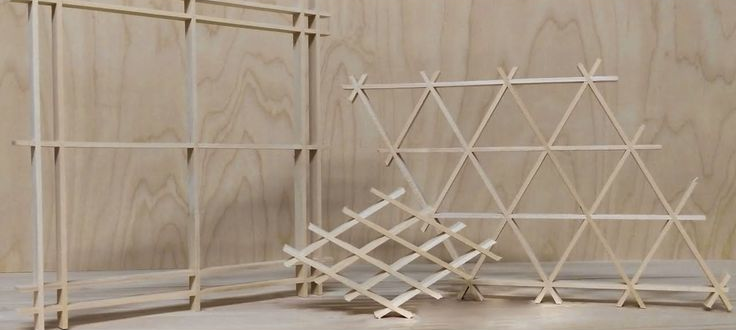
There are 3 styles of frames for kumiko; square, diamond and triangular, each produces different patterns
Getting Jiggy with It
Kumiko is only really possible with a large amount of jigs. All of the pieces have to interlock so precision is super important.
There are 2 types of jigs you need; grid jigs and piece jigs. The strip jigs are important to get the frames into the correct proportions and the strip jigs are important to get the interlocking pieces to fit properly.
Grid Jigs
There aro two main jigs for this; groove cutting and strip thicknessing. The strips have to be very precisely cut and thicknessed or the frame will be out of alignment. The thicknessing jig I made is quite simple but pretty effective.
The groove cutting jig is a little trickier. I tried really hard to get an exact 90 deg cut
There is a really good trick for the saw. If you check how deep you need to cut the groove then you can double sided tape a strip of wood to the side of the blade and it acts as a depth stop.
Piece Jigs
The piece jigs I made were from plywood, most people make them from hardwood but I couldn't see any reason why they shouldn't make them from plywood. I couldn't find any perfect measurements for the jigs but they ranged from 2" to 3" thick. So I though I'd go on the safe side and try for a 3" jig. I sandwiched 3 x 24mm pieces together and made a 72mm piece. These turned out to be pretty large end unless you need to cut really wide pieces it's a little excessive so a 48mm jig would be fine.
I started out with 45, 30, 22.5 and 67.5 degree angles to be able to cut the "Asa No Ha" pattern. Each side has one angle cut into it so there are 2 jigs.
Table Saw Jigs
It's possible to make the grid jigs for a table saw which is a great timesaver, it's also great for repeatability as you can set depth stops